Category: Infectious Disease

Penyakit berjangkit

  • CONTINUE APO-Mometasone Nasal Spray: Relief for Allergic Symptom

    CONTINUE APO-Mometasone Nasal Spray: Relief for Allergic Symptom


    APO-Mometasone Nasal Spray

    APO-Mometasone is an effective nasal spray to reduce inflammation in the nostril. This nasal spray is categorized as a controlled drug and should consult a doctor before using it. APO-Mometasone Furoate Aquedos Nasal Spray 50mcg/Metered Spray is a white suspense medication that contains 50mcg of Mometasone furoate in each metered spray.

    The rainy season at the end of the year in Malaysia and the hazy weather due to uncontrolled forest fires are very dangerous to us. Airborne fine dusts also carry bacteria that can cause nasal discomfort and cause colds, sneezing, coughing and itchy eyes. For those who have difficulty breathing or allergies, you should seek immediate treatment because if left to linger, you find it difficult to sleep at night or do activities such as sports and work in the office.

    Aside from tablet medications treating colds and nasal congestion, many are unaware that with nasal sprays can treat nasal irritation and allergic problems easily.

    What are the uses of Mometasone Furoate?

    Mometasone Furoate is a medication used to treat swollen skin conditions, skin irritations, rashes, eczema and prevent allergies. It has the best anti-allergic and anti-inflammatory effect mechanism to inhibit the release of allergic reactions. The ingredient Mometasone Furoate found in APO-Mometasone is administered as a nasal spray.

    This APO-Mometasone nasal spray is available at private clinics. Usually, the doctor will give this nasal spray to get the effect of quick relief due to severe sinusitis. You can use this nasal spray if you have problems with blocked nostrils. You are advised to use this product intensively and continuously until you see a positive effect on your nostrils (consult to your doctor first).

    APO-Mometasone nasal spray is suitable for use during the pollen season for 2 to 4 weeks. Use 2 sprays daily on each nostril or as advised by a doctor. When symptoms are under control, reduce to 1 spray per nostril. Each spray contains 50mcg which means if you use 2 APO-Mometasone nasal sprays equivalent to mcg. On the front label is written the words ‘Corticosteroid for intranasal use only’, 140 Metered Spray and Apotex Standard.

    How to Use APO-Mometasone Nasal Spray?

    APO-Mometasone nasal spray is suitable for use by adults, adolescents and children aged 30-11 years to treat the symptoms of seasonal allergic rhinitis or perennial rhinitis.

    APO-Mometasone nasal spray is manufactured by Apotex Inc. (Richmond Hill), 380, Elgin Mills Road East, Richmond Hill, Ontario, Canada. This medicine is distributed by Pharmaforte (M) Sdn. Bhd. which is located at Sunway Damansara, Petaling Jaya Selangor Darul Ehsan. Store below 30 ° Celsius and protect from direct sunlight. Should not be placed in the freezer.


    APO-Mometasone Nasal Spray for Allergic

    APO-Mometasone Nasal Spray: Summary

    • Health Article Title: APO-Mometasone Nasal Spray
    • Category: #Medicine 
    • Purpose: #GeneralInformation 

    Frequently Asked Health Questions – Your Health Concerns Answered

    Looking for answers to your health questions? We’ve gathered the most frequently asked health concerns and provided clear, concise information to help you understand various health topics. With this easy-to-understand guide, you’ll be able to make informed decisions about your well-being and live a healthier life.

    What is seasonal allergic Rhinitis?

    Seasonal allergic rhinitis is triggered by allergens that result from small and fine particles in our environment. These small and fine particles are carried by airborne and enter the nostril causing severe irritation such as colds, sneezing etc. This condition causes swollen and inflammation of the nostrils.

    What is Corticosteroid for intranasal use only?

    Corticosteroids are medications used to help you breathe more easily. Symptoms such as a stuffy nose, allergies, and inflammation, severe sneezing make it difficult for you to breathe through your nose. The word intranasal means that this medicine is only used for the nostrils and not for the eyes, ears and other sensitive parts.
  • CONTINUE Understanding Melioidosis: The Bacterial Infection Explained

    CONTINUE Understanding Melioidosis: The Bacterial Infection Explained

    Melioidosis Demystified

    According to the Ministry of Health Malaysia (MOH), Melioidosis is a water and soil borne disease caused by Burkholderia pseudomallei bacterial infection and can cause serious complications. Preventive measures are best as there is no vaccine to prevent this bacterial infection especially in the rainy season. Contaminated stagnant water such as in flooded areas, paddy fields and lakes can cause Melioidosis. Many people forbid us from playing in the water when floods hit because floods not only bring destruction of property and livestock, but they also bring various serious diseases.

    Water that is supposed to flow from drains, garbage in garbage dumps, animal feces and harmful contaminants in the soil will all come out covering the water surface during a flood. And toxic and harmful chemicals absorbed by the soil will also come out and contaminate the flood water. Who says flood water is good? Try to see what happens after the flood recedes, we find a lot of flies flying around showing the place flooded due to the flood has been dirty and polluted.

    In short, all the good and bad things in the ground will come out when there is a flood. What is even sadder, when in our village there are animal pens and chicken coops. Carcasses of animals that have died due to floods and feces will contaminate the entire flood water, so there are various types of diseases. Melioidosis is one of the diseases that seems to show mild symptoms but if not treated immediately, serious complications to the point of death can occur.

    Localized Infections

    Localized infections are a common symptom experienced by those with Melioidosis. Swelling of the body, joint pain, fever, sores and pus are examples of localized infections. Seek immediate treatment if you or your children develop any of the above symptoms.

    Lung infection

    If the localized infection can be identified in terms of physical changes such as swelling, joint pain, scabies, pus and fever, the lung infection also attacks the internal organs of humans, namely the lungs. Among the symptoms and signs of lung infection caused by Burkholderia pseudomallei bacteria are as follows: –

    • Cough
    • Breathing problems.
    • Chest ache.
    • High fever.
    • Headache
    • Anorexia.

    Blood Infections

    The third stage for Melioidosis is known as a blood infection. This is a dangerous category because Burkholderia pseudomallei bacteria have entered the blood. Among the signs and symptoms are as follows: –

    • Fever.
    • Headache.
    • Joint pain.
    • Breathing problems.
    • Abdominal discomfort.
    • Confusion.
    • Septic shock.

    Prevention Measures

    There are 4 preventive measures that you need to follow during floods to prevent Melioidosis including: –

    1. Step 1: Wear boots and gloves in potentially contaminated areas.
    2. Step 2: Wear a face mask: Cleaners should wear boots, gloves and face mask that can prevent Melioidosis infection from occurring.
    3. Step 3: Avoid contact: Especially for diabetics and kidney patients with open wounds should avoid touching contaminated water or soil.
    4. Step 4: Immediate Treatment: If you experience signs or symptoms as described after exposure to contaminated water or soil, you should seek immediate treatment at a nearby clinic or hospital.

    As a reminder, don’t play around when the flood season hits, it’s better if you’re looking for a high place to wait for the rescue team to come to your rescue. Love your life and your loved ones. Indeed, flood water is not the same as pool water or sea water because the water in the pool has chlorine which can prevent germs and sea water has salt which is salty can prevent any infection from spreading.


    What is Melioidosis Bacterial Infection


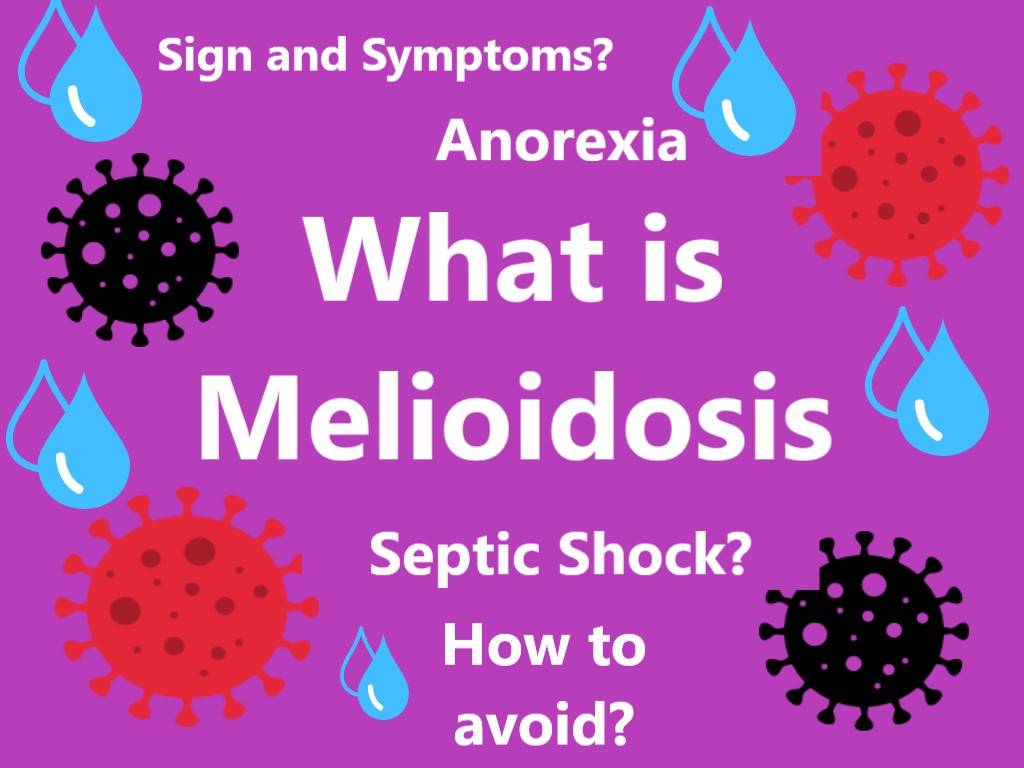
    What is Melioidosis Anorexia Prevention Infection

    Summary

    • Health Article Title: Melioidosis
    • Category: #Disease #HealthInfo
    • Purpose: #GeneralInformation
    • Source: FB KKM official

    Frequently Asked Questions

    Why must we avoid infectious diseases?

    Avoiding infectious diseases is crucial for several reasons:

    1. Health and Well-being: Infectious diseases can lead to serious illness, hospitalization, and in severe cases, death. By avoiding these diseases, individuals can maintain better health and well-being.
    2. Preventing Spread: Infectious diseases can spread rapidly from person to person, leading to outbreaks or even pandemics if left unchecked. Avoiding these diseases helps prevent their spread within communities.
    3. Reducing Healthcare Burden: Infectious diseases place a significant burden on healthcare systems, including hospitals, clinics, and medical professionals. By avoiding these diseases, individuals can reduce the strain on healthcare resources.
    4. Protecting Vulnerable Populations: Some individuals, such as the elderly, young children, and those with weakened immune systems, are more susceptible to severe complications from infectious diseases. Avoiding these diseases helps protect vulnerable populations.
    5. Maintaining Productivity: Illnesses from infectious diseases can lead to absenteeism from work or school, reducing productivity and economic output. By staying healthy, individuals can contribute more effectively to society.

    Overall, avoiding infectious diseases is essential for safeguarding individual and public health, preventing the spread of disease, and maintaining a functioning society.

    Is it dangerous to get an infectious disease?

    Yes, infectious diseases can be dangerous for several reasons:

    1. Severity of Illness: Some infectious diseases can cause severe illness or complications, leading to hospitalization or even death. Examples include Ebola, HIV/AIDS, and severe cases of influenza.
    2. Risk of Transmission: Many infectious diseases are highly contagious and can spread rapidly from person to person. This can lead to outbreaks or pandemics if appropriate measures are not taken to control transmission.
    3. Vulnerable Populations: Certain groups, such as the elderly, young children, pregnant women, and individuals with weakened immune systems, are at higher risk of severe complications from infectious diseases. Protecting these vulnerable populations is essential to prevent serious outcomes.
    4. Antimicrobial Resistance: The misuse or overuse of antibiotics can lead to the development of antimicrobial resistance, making infections more difficult to treat. This can result in longer illness durations, increased healthcare costs, and higher mortality rates.
    5. Impact on Healthcare Systems: Large outbreaks of infectious diseases can overwhelm healthcare systems, leading to shortages of medical supplies, hospital beds, and healthcare workers. This can compromise the ability to provide adequate care to those in need.

    Overall, while not all infectious diseases are inherently dangerous, they have the potential to cause significant harm to individuals and communities if not properly controlled and managed. Taking preventive measures, such as vaccination, practicing good hygiene, and following public health guidelines, can help reduce the risk of acquiring and spreading infectious diseases.

    What is an example of infectious disease?

    There are numerous examples of infectious diseases, caused by various pathogens such as bacteria, viruses, fungi, and parasites. Here are some common examples:

    1. Influenza (Flu): A viral respiratory illness caused by influenza viruses, typically characterized by fever, cough, sore throat, body aches, and fatigue. In severe cases, it can lead to complications such as pneumonia.
    2. COVID-19: Caused by the novel coronavirus SARS-CoV-2, COVID-19 emerged in late 2019 and has since become a global pandemic. It primarily spreads through respiratory droplets and can cause a wide range of symptoms, from mild respiratory issues to severe pneumonia and death.
    3. Tuberculosis (TB): A bacterial infection caused by Mycobacterium tuberculosis, which primarily affects the lungs but can also affect other parts of the body. Symptoms include coughing, chest pain, weight loss, and fatigue.
    4. HIV/AIDS: Human immunodeficiency virus (HIV) weakens the immune system, making individuals more susceptible to infections and certain cancers. Acquired immunodeficiency syndrome (AIDS) is the late stage of HIV infection, characterized by severe immunosuppression and the occurrence of opportunistic infections.
    5. Malaria: A mosquito-borne infectious disease caused by Plasmodium parasites, which infect and destroy red blood cells. Symptoms include fever, chills, headache, and muscle aches, and in severe cases, it can lead to organ failure and death.
    6. Salmonella Infection: Caused by the Salmonella bacteria, typically transmitted through contaminated food or water. Symptoms include diarrhea, fever, and abdominal cramps, and in severe cases, it can lead to dehydration and bloodstream infection.

    These are just a few examples, and there are many other infectious diseases that pose significant health risks to individuals and populations worldwide. Vaccination, proper hygiene, and public health measures are essential for preventing the spread of infectious diseases.

    What are the signs and symptoms if you get Melioidosis?

    According to information from the Ministry of Health Malaysia (MOH), there are 3 categories of signs and symptoms if you get Melioidosis. You can check yourself if you get Melioidosis. Localized infections, lung infections and bloodstream infections are the main signs and symptoms of Melioidosis.

    What is a septic shock?

    Septic shock occurs when after a person has an infection causes blood pressure to drop to low levels and can be life threatening. Sepsis is a reaction that occurs at an early stage of infection.

    Melioidosis if not treated immediately can lead to death. There is no vaccine that can prevent Melioidosis.

    What is Anorexia?

    Anorexia comes from a Greek word meaning loss of appetite. Anorexia Nervosa will cause weight loss, restricting from eating food due to loss of appetite and a strong desire to be thin. For patients with respiratory related diseases have a high tendency to get lung infections caused by Melioidosis. If you, your parents or relatives are victims of floods, seek medical attention immediately to prevent Melioidosis from invading the lungs.

  • delete Penularan Virus Cacar Monyet: Pemahaman dan Pencegahan

    delete Penularan Virus Cacar Monyet: Pemahaman dan Pencegahan


    Langkah Pencegahan Penyakit Monkeypox (Cacar Monyet)

    Cacar Monyet (Monkeypox)

    Ketahui virus terbaru melanda dunia iaitu Monkeypox ataupun Cacar Monyet? Mari kita dapatkan informasi dari sumber yang dipercayai supaya kita dapat menjaga diri kita sewaktu berada diluar.

    Langkah Pencegahan Penyakit Monkeypox (Cacar Monyet) Highlights

    Setelah kita mengetahui tentang definisi dan sejarah, FAQ, tanda dan gejala Monkeypox, kini kita dapatkan pula bagaimana Langkah Pencegahan Penyakit Monkeypox yang perlu dilakukan oleh pengembara di negawa wabak supaya kita terhindar dari penyakit ini.


    Kesimpulan Langkah Pencegahan Penyakit Cacar Monyet

    Sentiasa beringat kerana penyakit ini mudah merebak dan menjangkiti manusia melalui sentuhan dan perkara lain seperti disebutkan di atas. Amalkan cuci tangan setiap kali menyentuh sesuatu benda atau bersalaman dengan sesiapa sahaja kerana kita tidak mahu virus ini merebak seperti virus Covid-19 yang merebak dengan sepantas kilat ke semua pelusuk dunia.

    Tahukah Anda?

    Sentiasa mendapatkan maklumat tepat dan sahih dari sumber yang dipercayai dan jangan ambil ringan akan penjagaan diri (hygiene) dapat menghindarkan kita dari wabak Monkeypox ini. Sentiasa dengar arahan pihak berkuasa mengenai situasi semasa dan marilah kita berdoa supaya ia tidak berlaku di negara kita.

    Contact Kementerian Kesihatan Malaysia KKM

    Sektor Zoonosis
    Bahagian Kawalan Penyakit
    Kementerian Kesihatan Malaysia

    Tel: 0388834412 / 4508 / 4509

    zoonosis@moh.gov.my Fax: 02-88891013


  • Cacar Monyet: Definisi & Sejarah

    Cacar Monyet: Definisi & Sejarah

    Cacar Monyet (Monkeypox)

    Ingin tahu apa itu Cacar Monyet (Monkeypox) dan bagaimana sejarah dan asal usul penyakit ini berlaku? Mari kita dapatkan informasi berguna dari fakta yang tepat dan sumber yang dipercayai supaya anda menjadi seorang warga berilmu dan boleh membezakan yang mana satu fakta atau auta. 

    Sejarah

    Penyakit yang sedang hangat diperkatakan iaitu Cacar Monyet ataupun dalam bahasa Inggerisnya ialah Monkeypox sekarang ini sudah menular di seluruh pelusuk dunia. Dan apakah yang anda perlu tahu mengenai penyakit Monkeypox ini? Kami berjaya mendapatkan maklumat tepat dan sahih dari Kementerian Kesihatan Malaysia KKM mengenai Apa Itu Monkeypox Definisi Sejarah. Semoga kita mendapat manfaat mengenai perkara ini.

    Definisi

    Monkeypox atau Cacar Monyet adalah sejenis penyakit zoonotik yang disebabkan oleh virus Monkeypox. Virus tersebut tergolong dalam genus Orthopoxvirus daripada keluarga virus Poxvirdae. Virus lain dalam keluarga Poxvirdae adalah termasuk cacar air (smallpox), vaccinia, cowpox, camelpox dan ectromelia (mousepox). Selepas cacar berjaya dibasmi pada tahun 1980 dan pemberian vaksin cacar diberhentikan, Monkeypox telah muncul sebagai jangkitan Orthopoxvirus yang paling lazim berlaku kepada manusia.

    Terdapat dua (2) clade virus Cacar Monyet iaitu dari Afrika Tengah (Congo Basin) dan Afrika Barat. Virus clade Congo Basin telah menyebabkan penyakit yang lebih teruk dan ia lebih mudah berjangkit. Nama Cacar Monyet agak mengelirukan kerana pembawa utama virus ini adalah haiwan kecil seperti tikus. Ia dinamakan sedemikian kerana virus ini pertama kali ditemui dalam monyet makmal pada akhir 1950-an. Walaubagaimanapun, saintis masih tidak dapat menentukan samada monyet adalah haiwan pembawa yang utama.

    Pesakit yang dijangkiti akan sembuh tanpa rawatan dalam tempoh selama 2-4 minggu. Selepas dua (2) hari demam, ruam akan kelihatan pada muka dan merebak ke lengan dan kaki, kemudian ke telapak tangan dan kaki. Ruam biasanya merebak ke semua bahagian badan dalam tempoh 24 jam. Walaubagaimanapun, lazimnya ia lebih tertumpu pada bahagian muka, lengan dan kaki.

    Ruam bermula sebagai makular dan papular, kemudian berkembang menjadi vesikel dan pustular. Ruam kemudiannya berubah menjadi kuping dan tercabut dalam tempoh 2-4 minggu. Ruam Cacar Monyet (Monkeypox) berbeza dengan cacar air (chickenpox) dimana lesi cacar berada pada pelbagai peringkat perkembangan dan penyembuhan, berbanding lesi Cacar Monyet (Monkeypox) yang berada pada peringkat yang sama.

    Bengkak kelenjar limfa berlaku pada masa ruam terbentuk. Ciri ini juga membezakannya dari cacar air atau kayap (varicella).

    Kawasan Jangkitan

    Cacar Monyet telah dilaporkan dikawasan hutan hujan tropika di Afrika Tengah dan Afrika Barat. Negara yang terdapat dikedua-dua kawasan ini adalah Republik Demokratik Congo, Republik Congo, Cameroon, Republik Afrika Tengah, Nigeria, Ivory Coast, Liberia, Sierra Leone, Gabon dan Sudan Selatan. Cacar Monyet dianggap endemik di Republik Demokratik Congo (DRC). Sejak 2005, terdapat lebih 1,000 kes yang disyaki dalam setahun. Nigeria pula pernah melaporkan kejadian wabak yang besar pada tahun 2017 hingga 2018.

    Tahukah Anda?

    Jadi penyakit Cacar Monyet atau Monkeypox ini bukan baru lagi dalam sejarah perubatan dunia. Tetapi kebanyakan dari kita merasakan bahawa ia adalah penyakit baru. Sentiasa berhati-hati dan dapatkan informasi yang betul untuk kesejahteraan semua.

    Hubungi KKM

    Sektor Zoonosis
    Bahagian Kawalan Penyakit
    Kementerian Kesihatan Malaysia

    Tel: 0388834412 / 4508 / 4509
    Fax: 02-88891013

    zoonosis@moh.gov.my

    Ringkasan

    • Tajuk Artikel Kesihatan: Cacar Monyet (Monkeypox)
    • Kategori: #InfoSihat 
    • Tujuan: #MaklumatAm 

    Soalan Lazim

    Untuk pengetahuan semua, pihak Kementerian Kesihatan Malaysia ataupun singatannya KKM telah menyediakan  FAQ Cacar Monyet (Monkeypox) kepada tatapan umum. Mari kita dapatkan FAQ ini dari sumber yang sahih.

    Cacar Monyet adalah penyakit zoonotik. Apakah haiwan yang terlibat?

    Banyak spesis haiwan yang didapati dijangkiti virus Cacar Monyet. Ia termasuk spesis tupai tali dan tupai pokok, tikus gergasi Gambia, tikus belang, dormis dan promat. Tikus seperti tikus gergasi Gambia (Cricetomys Gambianus) dan tupai disyaki sebagai haiwan pembawa semulajadi virus ini.

    Apakah gejala penyakit Monkeypox ini?

    Tempoh inkubasi (masa dari jangkitan kepada mula bergejala) untuk cacar monyet ini kebiasaannya adalah antara tuhuh (7) hingga 14 hari (atau dalam lingkungan masa antara 5 hingga 21 hari). Gejala yang dialami adalah:

    • Demam
    • Sakit badan
    • Sakit kepala
    • Bengkak kelenjar limfa
    • Ruam,

    Bagaimakah kes baru Cacar Monyet (Monkeypox) dikenalpasti?

    Kes jangkitan Cacar Monyet akan datang dengan ruam makulopapular atau vesikular atau pustular yang tersebar diseluruh badan terutama dimuka dan tangan beserta dengan satu atau lebih gejala atau tanda berikut:

    • Demam melebihi 38.3ºc.
    • Sakit kepala yang teruk.
    • Sakit belakang.
    • Sakit urat.
    • Bengkak kelenjar limfa.
    • Kekejangan otot.

    Dengan kriteria epidemiologi:

    1. Sejarah pendedahan kepada kes disyaki atau disahkan dijangkiti Cacar Monyet (Monkeypox) semasa tempoh inkubasi.
    2. Atau sejarah pendedahan kepada haiwan mamalia liar, haiwan kurungan atau peliharaan yang dibawa masuk dari negara endemik Cacar Monyet semasa tempoh inkubasi.
  • Wabak Monkeypox: Risiko, Pencegahan & Rawatan

    Wabak Monkeypox: Risiko, Pencegahan & Rawatan

    Wabak Monkeypox

    Monkeypox atau mpox kini menjadi isu kesihatan global dengan lebih 99,000 kes dilaporkan di 116 negara menurut WHO. Ketahui Tanda Jangkitan Monkeypox, Langkah Pencegahan, serta Rawatan & Ubat Sokongan yang disarankan oleh KKM dan WHO. Sertai usaha kesedaran dan lindungi diri serta keluarga daripada wabak ini dengan panduan praktikal yang terbukti berkesan.

    Pengenalan

    Monkeypox (mpox) adalah penyakit zoonotik yang disebabkan oleh virus daripada famili Poxviridae. Ia boleh merebak daripada haiwan kepada manusia, tetapi kini lebih banyak kes berlaku melalui sentuhan rapat antara manusia. WHO telah mengisytiharkan monkeypox sebagai darurat kesihatan awam global pada Ogos 2024 selepas peningkatan kes di Afrika dan penularan ke negara lain.

    Menurut laporan WHO, sebanyak 99,176 kes mpox telah direkodkan di seluruh dunia dengan 208 kematian antara Januari 2022 hingga Jun 2024. Walaupun tiada kes baru dilaporkan di Malaysia setakat ini, KKM terus melakukan pemantauan di pintu masuk antarabangsa dan memberi amaran kepada pengembara untuk lebih berhati-hati.

    Panduan

    Menurut laman Facebook rasimi Kementerian Kesihatan Malaysia, KKM ingin merujuk kepada berita penularan wabak cacar monyet di tiga (3) benua iaitu Benua Eropah (United Kingdom, Sepanyol, Portugal, Belgium, Peranchis, Itali dan Jerman), Benua Amerika (Amerika Syarikat dan Kanada) dan Australia.

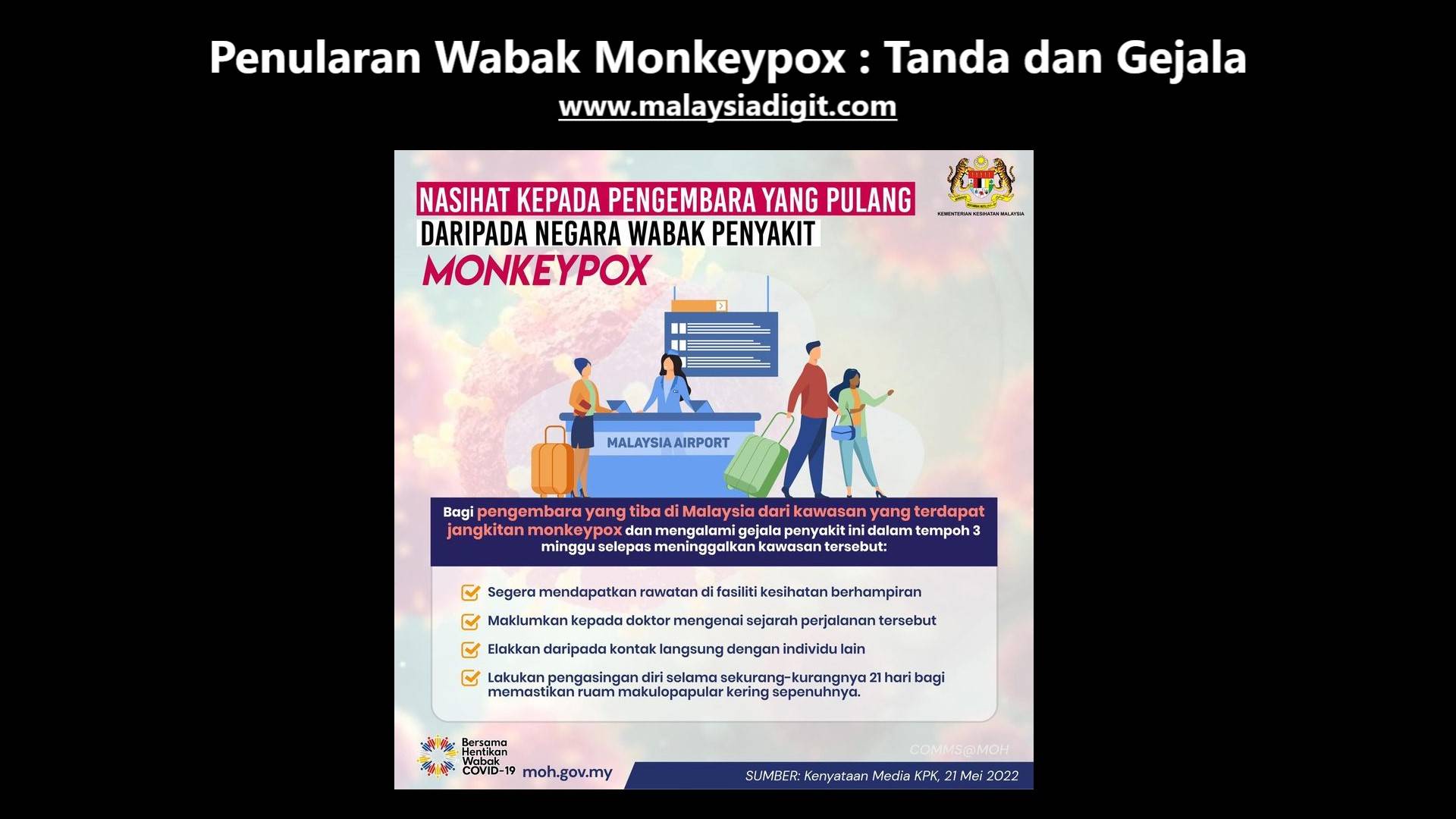
    Bagi pengembara yang baru tiba dan mengalami gejala jangkitan monkeypox, mereka dinasihatkan untuk mengikuti langkah yang dikongsikan agar:

    • Tindakan pengasingan dapat segera dilakukan.
    • Pengesanan dan kuarantin kontak dapat dilaksanakan bagi mengekang penularan jangkitan.

    Nasihat Kepada Pengembara

    Berikut adalah nasihat yang dinukilkan oleh Kementerian Kesihatan Malaysia kepada pengembara yang pulang dari negara yang telah dikenalpasti wujudnya wabak Monkeypox. Bagi pengembara yang tiba di Malaysia dari kawasan yang terdapat jangkitan Monkeypox dan mengalami gejala ini dalam tempoh tiga (3) minggu selepas meninggalkan kawasan tersebut:

    1. Segera dapatkan rawatan di fasiliti kesihatan berhampiran.
    2. Maklumkan kepada doktor mengenai sejarah perjalanan tersebut.
    3. Elakkan daripada kontrak lansung dengan individu lain.
    4. Lakukan pengasingan diri selama sekurang-kurangnya 21 hari bagi memastikan ruam makulopapular kering sepenuhnya.

    Tanda Jangkitan

    Demam Dan Sakit Badan

    Pesakit biasanya mengalami demam, sakit kepala, sakit otot, dan keletihan dalam tempoh 5–21 hari selepas terdedah. Gejala awal ini sering menyerupai influenza, menyebabkan pesakit sukar membezakan pada peringkat awal.

    Ruam Kulit

    Ruam bermula di muka sebelum merebak ke seluruh badan. Ia berkembang daripada bintik merah kepada lepuh berisi cecair dan akhirnya menjadi kudis. Ruam ini boleh menyebabkan rasa sakit dan gatal yang ketara.

    Bengkak Kelenjar Getah Bening

    Berbeza dengan cacar biasa, monkeypox menyebabkan pembengkakan kelenjar getah bening, terutamanya di leher dan ketiak. Ini adalah tanda klinikal yang membantu doktor membezakan monkeypox daripada penyakit lain.

    Risiko Komplikasi

    Pesakit dengan sistem imun lemah, kanak-kanak, dan wanita hamil lebih berisiko mengalami komplikasi serius termasuk jangkitan sekunder, pneumonia, atau sepsis.

    Langkah Pencegahan Penyakit Monkeypox (Cacar Monyet)
    Langkah Pencegahan Penyakit Monkeypox (Cacar Monyet)

    Langkah Pencegahan

    Menurut Kementerian Kesihatan Malaysia menerusi informasi pada Facebook KKM rasmi menyatakan bahawa wabak monkeypox yang disebabkan oleh jangkitan orthopoxviruses telah melanda beberapa negara benua Eropah, Amerika Syarikat, Kanada dan Australia.

    Laporan awal mengatakan sebahagian kes yang mengalami jangkitan monkeypox ini mendapat jangkitan melalui kontak langsung dengan individu lain (pesakit monkeypox). Oleh itu, KKM ingin menasihati pengembara ke kawasan-kawasan yang terdapat kejadian monkeypox untuk mengambil langkah berjaga-jaga seperti yang dikongsikan.

    KKM juga akan terus memantau perkembangan situasi Cacar Monyet ini melalui laporan yang dikeluarkan oleh pihak WHO dan melakukan pemantauan kes disyaki Cacar Monyet di Malaysia di semua Pintu Masuk Antarabangsa (PMA).

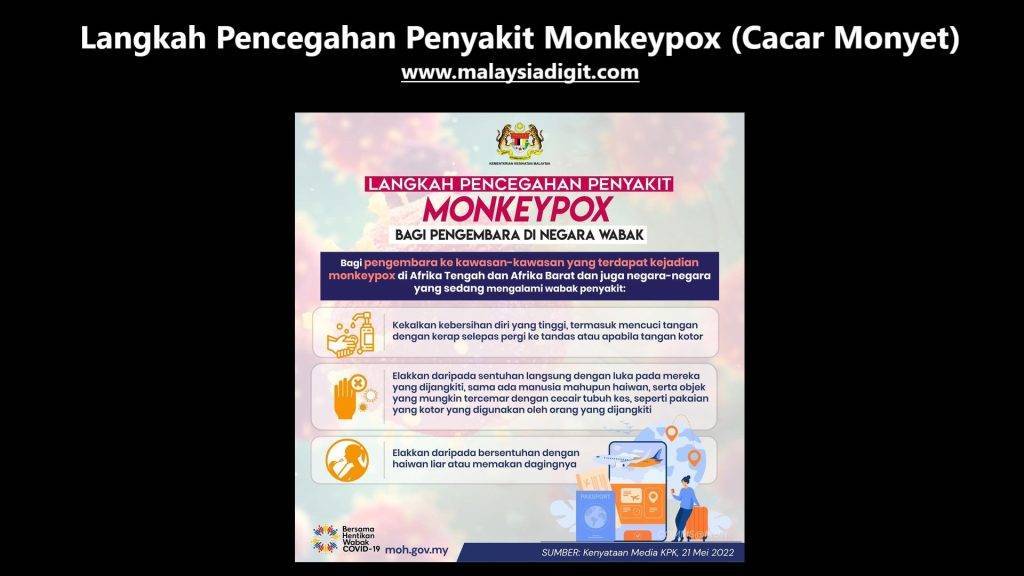
    Bagi pemgembara ke kawasan-kawasan yang terdapat kejadian Cacar Monyet di Afrika Tengah dan Afrika Barat serta negara-negara yang sedang mengalami wabak penyakit, berikut adalah Langkah Pencegahan Penyakit Cacar Monyet seperti disarankan oleh Kementerian Kesihatan Malaysia KKM seperti dibawah:

    1. Kekalkan kebersihan diri yang tinggi termasuk mencuci tangan dengan kerap selepas pergi ke tandas atau apabila tangan kotor.
    2. Elakkan dari sentuhan lansung dengan luka pada mereka yang dijangkiti samada manusia atau haiwan serta objek yang mungkin tercemar dengan cecair tubuh kes seperti pakaian yang kotor yang digunakan oleh orang yang dijangkiti.
    3. Elakkan dari bersentuhan dengan haiwan liar atau memakan dagingnya.

    Rawatan & Ubat

    Rawatan Sokongan

    Tiada rawatan khusus, tetapi pesakit diberikan rawatan sokongan seperti ubat demam, rehidrasi, dan kawalan simptom. Rawatan ini membantu pesakit pulih secara semula jadi.

    Ubat Antivirus

    WHO melaporkan bahawa ubat tecovirimat boleh digunakan dalam kes tertentu dengan kelulusan doktor. Ubat ini telah menunjukkan keberkesanan dalam mengurangkan tempoh penyakit.

    Vaksin

    Vaksin cacar (smallpox vaccine) didapati memberi perlindungan silang terhadap monkeypox. WHO mengesyorkan vaksinasi bagi kumpulan berisiko tinggi seperti petugas kesihatan.

    Pengasingan Pesakit

    Pesakit perlu diasingkan sehingga semua ruam sembuh sepenuhnya untuk mengelakkan penularan. Tempoh pengasingan biasanya antara 2–4 minggu bergantung pada tahap penyakit.

    Pemantauan Kesihatan

    KKM melakukan pemantauan berterusan di pintu masuk antarabangsa dan hospital bagi mengesan kes disyaki. Langkah ini penting untuk mencegah kemasukan wabak ke Malaysia.

    Kesimpulan

    Monkeypox adalah wabak global yang perlu diberi perhatian serius. Walaupun tiada kes baru dilaporkan di Malaysia, langkah pencegahan seperti kebersihan tangan, kuarantin, dan vaksinasi adalah penting. Dengan kerjasama masyarakat dan pemantauan berterusan oleh KKM serta WHO, kita boleh melindungi diri dan keluarga daripada risiko jangkitan.

    Tahukah Anda?

    Segera ikuti arahan terkini kerajaan dari semasa ke semasa supaya wabak Monkeypox ini tidak merebak dengan cepat di negara kita. Dapatkan maklumat yang benar dan sahih. Bertindak segala jika terdapat tanda-tanda seperti disebutkan.

    Maklumat Hubungan

    • Kementerian Kesihatan Malaysia (KKM)
    • Alamat: Bahagian Kawalan Penyakit, Kompleks KKM, Putrajaya, Malaysia
    • Telefon: +603‑8883 4003
    • Laman Web: www.moh.gov.my
    • E‑mel: info@moh.gov.my
    • Waktu Operasi: Isnin – Jumaat, 8:00 pagi – 5:00 petang

    Ringkasan

    • Tajuk Artikel Kesihatan: Monkeypox
    • Kategori: #PenyakitBerjangkit  
    • Tujuan: #MaklumatAm 

    Soalan Lazim

    Apakah tanda-tanda penyakit cacar monyet atau Monkeypox ini?

    Tanda-tanda jangkitan cacar monyet adalah mirip cacar (smallpox) iaitu demam, keletihan, sakit kepala serta ruam makulopapular.

error: Content is protected !!